If you want a shortcut: for memorising, start with Mahmoud Khalil Al-Husary or Muhammad Siddiq Al-Minshawi, because both are slow and articulate every letter. For emotional depth, go to Abdul Basit Abd us-Samad. For long, calm listening sessions, Saad Al-Ghamdi or Abu Bakr Al-Shatri. For a modern, clear voice with an enormous catalogue online, Mishary Rashid Alafasy. For the sound of prayer in Makkah, Abdul Rahman Al-Sudais, Saud Al-Shuraim or Maher Al-Muaiqly.
Listen now
Then the same surah in the other voices of this guide, one after another.
That list is a starting point, not a ranking. Reciters are not better or worse in the way that a leaderboard implies. They are suited to different situations, and most people who listen regularly end up with two or three names rather than one.
How to pick a reciter: start from what you need
Before you sample voices, decide which of these you are doing, because the right answer changes completely.
- Following along in a mushaf or memorising. You need slow pace, wide gaps between phrases, and clean articulation. A highly ornamented recording is harder to follow for this purpose.
- Listening while your hands are busy. You need something steady that does not demand your full attention and does not startle you with dynamic swings.
- Sitting down to listen properly. Now the ornamented recordings earn their place, and the tempo that felt slow before will feel right.
- Recitation before sleep. Even, low-register, unhurried. Anything with big peaks will keep you awake.
Once you know which voice suits you, the harder part is listening consistently, which is its own problem and has its own answers.
Getting this wrong is the most common reason people conclude they "don't connect" with recitation. A mujawwad recording asks for your full attention, and a fast murattal reading is not made for memorising.
The sound of prayer in Makkah and Madinah
This is the sound most people meet first today, through broadcasts of prayer from the two holy mosques. It is recitation shaped by leading enormous congregations, which favours clarity and projection over ornament.
Abdul Rahman Al-Sudais has a bright, high, carrying voice with a quick, urgent forward motion. His night-prayer recordings from Ramadan are some of the most widely shared Quran audio there is, and they are a good way into this style.

Saud Al-Shuraim is deeper and more deliberate than Al-Sudais, with a heavier, more measured delivery, and the two are often heard alternating in the same recordings.

Maher Al-Muaiqly has a warm, steady voice. His murattal mushaf is a good middle option: warm enough to sit with, steady enough to follow along in a mushaf, and without the ornament that makes a recording demand your full attention.

The classical Egyptian school
Older, and a different sound entirely. This is the tradition that shaped how most of the world imagines Quranic recitation, largely through Egyptian radio recordings. Where the voices of the two holy mosques project to a crowd, these were recorded for a microphone, and they use that intimacy for ornament the mosque style has no room for. Four names sit at the centre of it.
Abdul Basit Abd us-Samad
His signature is breath control: he can carry a long phrase on a single breath and land it without any sense of strain, which is why his recordings still get analysed by people who have no interest in the technical side of recitation. His mujawwad work is the more famous, though his murattal readings are far easier to listen to daily.

Start with his mujawwad recitation of Surah Ad-Duha or the opening of Surah Yusuf.
Muhammad Siddiq Al-Minshawi
Often described as "the weeping voice" for the grief that sits inside his delivery even in ordinary passages. He is unusual in being both deeply moving and genuinely usable for learning. His Mushaf Mu'allim, in which a child repeats each phrase after him, is a teaching recording families still use with children, and adults use it too.
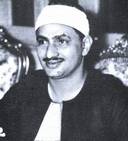
His catalogue is smaller than the others', so it is easy to hear most of it.
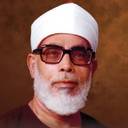
Mahmoud Khalil Al-Husary
The standard voice for anyone learning. His murattal is slow and exact, and he recorded the complete text in more than one transmission, which makes his catalogue the easiest place to compare them. If those transmissions mean nothing to you yet, start with what the transmissions actually are. His pace leaves space around every letter.
If you can only keep one reciter for study, this is the one.
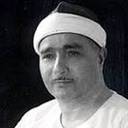
Mustafa Ismail
The most elaborate of the four in delivery. He varied his voice with unusual freedom, and his phrase endings are hard to predict even on a second listen. He is not where a newcomer should start, but he is where a curious listener eventually arrives.
Contemporary voices that travel well online
Mishary Rashid Alafasy has clean articulation, a moderate tempo, and a large, well recorded catalogue that is easy to find on almost any platform. When you search for him you may also find non-Quranic audio, so check what you are playing.

Saad Al-Ghamdi has an even, unhurried murattal that works well for very long listening sessions.

Abu Bakr Al-Shatri sits in a similar space, with a little more variation in his delivery.

What actually makes two reciters sound different
Three factors do most of the work.
Tempo and pause length. The gap a reciter leaves at the end of an ayah changes the whole feel of a recording more than most listeners realise.
Clarity of articulation. How distinctly each letter is given its due changes how easy a recording is to follow, and it is the first thing to listen for if you are reading along.
Where the reciter stops. Two reciters reading identical words can place their pauses at different permitted points, and the passage lands differently as a result.
Beauty of voice has always been noticed in this tradition. Abu Musa al-Ash'ari was told by the Prophet, peace be upon him, "You have been given one of the flutes of the family of Dawud" (Sahih al-Bukhari and Sahih Muslim), a remark on the sound of his recitation.
A week that will tell you who you actually like
Pick one short surah you know well and listen to it in five voices across five days: Al-Husary, Al-Minshawi, Abdul Basit, Al-Muaiqly, Alafasy. Same passage, one voice a day. You will have a clear preference by day four, and it will probably surprise you.
Doing this with full-surah files takes a lot of searching, which is why Quran Orb (مدار القرآن) keeps short clips alongside complete surahs: a fair comparison should take a minute, not an evening of searching through long files.
Frequently asked questions
Who is the best Quran reciter?
There is no meaningful single answer, and the reciters themselves would be the last people to rank each other. The useful question is which reciter suits what you are doing right now.
Which reciter is best for memorisation?
Al-Husary is the standard recommendation, with Al-Minshawi close behind. Both are slow enough that you can hear where each letter starts and stops. Whichever you choose, stay with one voice until the passage is stable.
Do all these reciters use the same recitation?
Nearly all commonly streamed recordings are in Hafs an Asim. Al-Husary is the notable exception, with complete recordings in more than one transmission, which makes his catalogue useful for comparison.
Why do some recordings sound so much more dramatic than others?
Because they are mujawwad, the slower and more ornamented public style, rather than murattal, the measured style used for most complete recordings. It is a difference of delivery, not of text.
Sources
- Sahih al-Bukhari 5048